Showing posts with label maui surfing. Show all posts

Friday, September 5, 2014

Surfer's Appetite - Shave Ice Is Nice After Maui Surf Lessons

 hawaiian shave ice

After finishing up a great Maui surf lesson and experiencing the exhilaration of riding the waves all the way to the beautiful Maui shoreline. What’s next?  Maybe about now, you need to find some refreshment – somewhere to relax and recharge before you get back out on the waves. To cool off and get a revitalizing treat, check out some of Maui’s best shave ice places.

Most people have had shave ice before, but maybe not Hawaiian shave ice. For example, have you ever had ice cream with your shave ice? Or topped with sweet cream? If not, you're going to have to try Hawaiian shave ice with all the unconventional extras!

There are quite a number of shave ice spots around the beaches we usually take our guests to for their Maui surf or SUP lessons. Here are a few of the best shave ice places in the area:


 Ululani’s Hawaiian Shave Ice

logocopy11A short drive up the coast from your Maui surf lesson at Kalama Beach Park on Kihei Road will take you to Ululani’s Hawaiian Shave Ice, which by the way, is the top-rated shave ice store and restaurant in all of Kihei and Lahaina. Not only do they have a vast selection of delicious flavors, but you can also try their “favorite combinations” flavors like Haleakala or Sunset Beach and add macadamia nut ice cream or shredded toasted coconut for a real sweet treat you're sure to remember. Well known for their “extremely fine shave,” awesome flavors, and friendly Aloha service, Ululani’s is a favorite spot for locals and visitors alike. They have two locations in Lahaina you could also check out if you want a cold dessert after your Maui surfing lesson at Ukuhame Beach Park.

S & Q’s Coffee and Shave Ice Shack

S&Q-website
If you’ve worked up a little bit of more of an appetite after your Maui SUP lesson and would also like to get a bite to eat with your shave ice dessert, check out S & Q’s Coffee and Shave Ice Shack at the Rainbow Mall on South Kihei Road. S & Q’s provides a diverse flavor selection (people love the shark’s blood flavor combo with ice cream and haupia, or sweetened coconut cream, sauce on top). S & Q’s is also renowned for their smoothies, teas, espressos, and breakfast selection with waffles, bagels, and parfaits. They also serve a selection of delicious sandwiches for lunch. So you can stop by S & Q’s before you go to our Maui surf school in the morning and then pop in later for some tasty shave ice treats after you perfect your surfing skills.

 Surfing Monkey Shave Ice

surfing monkey shave iceNaturally, we would be partial to this shave ice stand for its name alone, but Surfing Monkey Shave Ice does offer some flavorsome Hawaiian shave ice as well. Also located on South Kihei Road in Kihei, Maui next to Foodland, the Surfing Monkey has a fantastic selection of shave ice flavors and offers complimentary extras like azuki beans, vanilla ice cream, and delicious sweet cream. All of their shave ice syrups are derived locally from raw sugar cane. How fitting it is to try the Surfing Monkey after your Maui surf lesson?!?


 Old Lahaina Shave Ice

shave ice
Since you’re in the Lahaina area for your Maui surf lesson at Ukuhame Beach Park, stop by the Old Lahaina Shave Ice store for a refreshing and sweet treat. Try the mango,passion fruit, or pineapple flavors with ice cream. Then you can take a journey down Lahaina Town’s famous Front Street with its variety of other great shops, boutiques, and restaurants. Or you could get back in the waves to try out what you've learned during your Maui surf lesson with Hawaiian Style Surf!

Tuesday, August 26, 2014

Top Maui Surfing Spots


jaws surfing maui

Surfers come to Hawaii to catch some impressive surf breaks. And naturally the pristine beaches of Maui are pretty famous for surf and stand-up paddleboard spots, excellent both for those who want to learn to surf in Maui and others who want to test to the full their surfing skills. So whether you’ve just had your first Maui surf lesson or you’re an experienced surfer, you’ll want to take note of these unforgettable Maui surfing beaches.

At Hawaiian Surf Style, we often take our beginning Maui surf or SUP guests either to Ukuhame Beach Park in West Maui or Kalama Beach Park in South Maui. These beaches both offer dependable, easy peaks of knee high to head high waves that are great for beginners and longboard Maui surfers. These Maui surfing spots are good for morning Maui surf lessons when the winds are generally calmer and the waves are nice and smooth. Kalama Beach Park also has a great well-landscaped park area that’s perfect for having a picnic after finishing your Maui surfing lessons.
 
maui surfingWhile you’re in South Maui, you can also check out the great waves at Cove Beach Park. Just off of South Kihei Road, Cove Park is a hotspot for longboard surfers. It’s also a nice surfing beach for beginners and Maui stand-up paddle board enthusiasts with its calm waves rolling in. There’s also a nice park area here too for those who just like to admire the surfers and have a picnic.

Ho’okipa Beach on the North Shore just outside of Paia is recognized as the “windsurfing capital of the world” and is also a popular place for the experienced Maui surfer. This well-known surfing area boasts at times exceptionally large waves and strong winds, (especially in winter) causing it to attract world-class surfers, but due to this fact also, this location is not typically best for those just learning to surf. But you can sure enjoy watching pro surfers battle these commanding waves at a lookout point just above the popular surfing break known as “Pavilions,” which is the break furthest to the east.

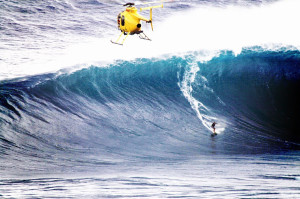
jaws 2Nearby Ho’okipa Beach lies another famous surfing location – Jaws – or Pe’ahi, Maui – about three miles east of Paia. This legendary Maui surfing break is where some of the best surfers in the world come to challenge, maybe not even each other, but some of the largest waves in the world. These massive waves can reach upwards of 4 stories during the winter. Often it becomes too dangerous for Maui surfers to paddle out to the break so they must use the “tow-in” surfing method where pro surfers are towed to the waves by water crafts and dropped off.

Several ‘Big Wave’ surfing competions have been held here including the Red Bull Jaws contest. Of course, these Maui surf waves are only attempted by professional surfers, and they can be very risky even for them. But there are nice lookout areas on the cliffs overlooking Jaws where photographers and other fans gather to watch these spectacular surfing breaks.

If you want a little less demanding surfing experience, Lahaina Harbor in West Maui is another a great spot for beginners and intermediate surfers with its steady waves. You can paddle out from the beach next to the marina and catch both left-handed and right-handed breaks.  After surfing you can shuffle over to historic Front Street in Lahaina and do some sightseeing or eat at one of the town’s tasty restaurants.

So after your Maui surf lesson with Hawaiian Style Surf, check out some of these awesome Maui surfing spots along the beautiful Valley Isle coasts, where novice and pro come out to perfect their Maui surfing techniques.

Friday, July 25, 2014

Top Surf School - Hawaiian Style Surf in Maui

maui surf lessons

Thinking of taking surfing lessons in Maui? It’s something you’ll be glad you if you decide to do, because learning to surf in Maui is one of the most awesome things you can be done. There’s an exhilaration you get by surfing that can’t easily be explained in words…you just have to experience it!

The Aloha Surf Guide encourages all beginning surfers to have a professional surfing instructor to ensure they have a safe and fun surfing experience.

So if you’re going to learn to surf or stand-up paddle, going to a Maui surf school is best.
But why not just rent or buy a surfboard and go out and catch some waves? Well, of couse you could do that but having an expert surfing instructor by your side can save you much time and needless frustration. Why reinvent the wheel learning to surf the hard way when you can have someone show you the best board, the right surfing techniques, and the ideal locations? It’s certainly worth the investment. Learning to surf or SUP with an instructor is also the safe way. With an instructor, you’ll know beforehand things like: the safest location for a novice, how far to paddle out, the right time to stand. All things you’ll need to know.

So then why can we say that Hawaiian Style is the best Maui surf school? For several reasons…Hawaiian Style’s surfing team are local professional instructors. These Hawaiian native surfers have spent much of their lives surfing in these Pacific Ocean waves. Thus, they know the best local surfing locations, how the local waves and tide act at times, and the best local techniques to learn how to master the surf.

Hawaiian Style surfing instructors love to teach others the Hawaiian legacy of surfing and be a part of the thrilling experience that it is to do so! For these native Hawaiians, surfing is much more than just a job or a sport…It’s a way of life. Having enjoyed surfing as part of the Hawaiian culture, they know how surfing embodies the spirit of Aloha. This passion for surfing is seen in their Maui surfing lessons.

Hawaiian Style instructors like Cameo specialize in teaching children and families to how to surf and stand-up paddleboard. Cameo has been surfing since she was about 6 years old.
 “I love working with families and teaching little kids to surf because I know it’s an experience they will never forget,” Cameo said.

Hawaiian Style also specializes in corporate surfing and SUP lessons. Company executives, employees, and their families come from around the world to learn to surf in Maui with the Hawaiian Style experts.

corporate surfing lessons

In addition to amazing surfing memories, Hawaiian Style also offers surfing lessons that include the use of a GoPro camera. These waterproof, mountable video cameras allow you to capture every aspect of your surfing adventure up close and personal.

So take a look at some of the awesome, laid back surfing lesson packages that Hawaiian Style offers for individuals, families, and entire companies?

There’s nothing like surfing in Maui, and no better way to learn to surf than with Hawaiian Style Surf – Maui’s Best Surf School.

Surfing with Proper Etiquette


Proper surfing etiquette is one of the first things you’ll need to learn as a surfing beginner in Maui. These basic rules of surfing are for your safety and that of other surfers, but following this surfing etiquette will also help you gain the high opinion of local seasoned surfers. And they might even give you some helpful tips.

surfing maui
You’ll need to understand these few basic ‘rules of the surfing road’ as part of your Maui surf lessons, before you embark on your surfing or “he’e nalu” adventure.


Surfing Right of Way. Just as with rules of the road, there are rules of the wave in surfing that surfers must yield to. The first surfer or the surfer closest to the peak of the break has the right of way on that wave. Anyone else paddling for that wave should allow him fist access. The surfer riding the wave has the right of way and the surfer paddling out to the break must yield. This means getting out of the way when possible, even if it is into the breaking wave or behind the rider.

If you’re paddling for a wave and someone is paddling out toward you, it’s good to make eye contact with that person and indicate the direction you’re intending to go in reference to them.

Don’t Ditch your Board. In the beginning, it may be a little difficult to handle your board on the waves. But don’t let go of your surfboard. If you throw your board behind you in a big wave, there’s a good possibility it will harm another surfer. Even with a leash attached, there’s a chance that the leash might break or detach itself from the board. Always put a great deal of distance between you and other surfers, paddling next to them, not in front or behind them so that if you’re board does get away from you, it won’t hurt others.

Staying in the right location for your skill level and ability will also help you to have more control over your board and allow you to surf with others safely.

Don’t ‘Drop In’ on or Snake Someone. This won’t be a problem if a surfer follows the right-of-way rule. But “dropping in” on a surfer basically means you’re cutting in front of them while they’re catching a wave. This happens when someone further out on the shoulder of the wave tries to catch a wave another surfer is already riding or has claimed, thus cutting off or blocking the first surfer. This is, of course, very offensive and very dangerous. The surfer with the right-of-way riding the wave could very easily run into the surfer dropping in. This could happen by accident so always stay alert to where others are around you.

Snaking is a more intentional drop-in where someone knowingly, and often more subtly and deviously, paddles around a person who has the right-of-way and catches the wave they were going for.

Don’t Paddle Into a Lineup. Again, the right-of-way rule says that the surfer riding the wave has the right of way. Thus, if you are paddling out, you need to make sure to stay out of the way of riders on the waves. Don’t paddle directly into or close to a lineup. Always paddle out around the break in the channel so that you’re not in the path of oncoming surfers.

Respect the ocean, the beach, and fellow surfers. As with commonplace rules of etiquette, you should always leave a place at least as good as the way you found it…picking up after yourself and not leaving trash on the beach or in the ocean. Also respect fellow surfers, apologizing for mistakes, and respect their local customs and rules of etiquette for the lineup.

Keep in mind these few simple guidelines of proper surfing etiquette, and you’ll not only be riding a waves, but also have the respect of the local surfing scene.

Sunday, July 6, 2014

Understanding Surfing Lingo with Help from Your Brahs

maui surfers

Surfing has its own life– its own culture and even its own language. In this Hawaiian sport, a style of slang has developed that unites its members into a surfing community. So to be a part of this community of Maui surfers (or at least to understand what they’re talking about), you’ll need to understand some of the basic Maui surfing verbiage. So check out the helpful glossary of surfing terms below:

Air or catch air – a surfing maneuver where the surfer and his/her surfboard gets airborne.

Aloha – greetings/farewell , affection, peace. “Aloha Spirit” denotes a friendly, easy-going, accepting attitude.

Amped – excited, full of life, stoked

An Den (“AHN Dehn”) – Phrase meaning “What’s up?” or “How are you?”

Anglin’ – Turning left and/or right on a wave; surfing at an angle across a wave instead of surfing straight toward the beach.

Bail out – To jump off or get away from your surfboard before a potential wipe out.

Barrel – When the wave has a hollow channel or tube when it breaks and curls over.

Beach Break – A wave formed over sand or those that break across a sandy beach.

Braddah (“BRAH-dah”) – Brother

Brah – Surfer friend

Blown Out – When winds are blowing so hard that they chop up the surf and make it impossible to
ride.

Carve/Carving – Making a radical turn on or through the wave.

Channel – A deep spot where waves don’t usually break.

Choke – a big amount of something, a lot.

Curl – The part of the wave that is spilling over and breaking.

Cut-out – To pull out of the wave.

Deck – The top-side of the surfboard, the side you stand on.

Drop in – To cut in on another surfer’s wave. Not good surfing etiquette.

Duck Dive – Diving underneath the waves to get past breaking waves easier and faster.

Eat it – To fall off your board or wipe-out.

Face – The almost vertical front portion or surface of a wave where the wave begins to curl overhead.

Goofy-Foot – Riding the surfboard with your right foot as the lead foot.

Gun – A long surfboard made for riding big waves.

Haole (“How-lee”) – A native Hawaiian term for foreigner or Caucasian.

Kook – A beginning surfer who gets in the way or into trouble because of ignorance, or a wannabe
who pretends to look the part but can’t surf.

Line-up – The place in the water beyond where the waves break where surfers wait to catch their next wave.

Lip – The top of the face of the wave.

Offshore Winds – When the wind is blowing off the shore, good surfing conditions.

Point Break – A wave that breaks on a rocky point.

Rail – The sides of the surfboard.

Reef Break – Waves that break over a coral reef.

Set – A group of waves. Larger waves will travel in 4 to 6 wave sets.

Snaking – To go around or behind another surfer who has the right-of-way on a breaking wave to get into a better position to catch their wave, forcing them to change direction and miss the wave. Cutting them off. Not good surfing etiquette.

Soup – The foamy or white water part of a broken wave.

Swell – Unbroken waves that move in groups with similar heights and frequency.

Tube – The part of the wave when the crest spills over the hollow barrel making a tunnel or pip-shaped wave; also Green Room or Barrel.

Wednesday, June 11, 2014

The Story of the Surf - History Lesson for Maui Surfers


duke surfing hawaii

As part of your Maui surf lessons, it’s best to go over the history of surfing. Now, you might not be overly excited at the idea of a history lesson, but as with most Hawaiian activities and subjects, you'll find this is much more interesting than your typical history class.

So, let's get the ball rolling, when you’re learning to surf in Maui, it’s nice to know a little about where this awesome sport came from so you can truly take in the Aloha spirit of surfing.

Surfing’s Origins.

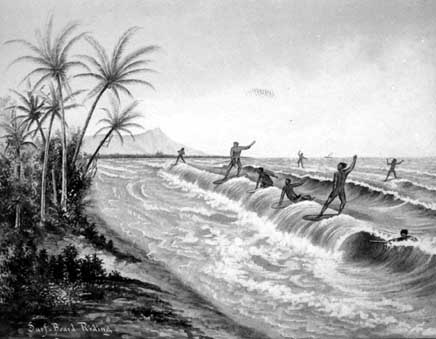
As far back as the 15th century there were Hawaiian chants honoring surfing and talking about competing chiefs, surfing wagers, and remarkable waves, hawaiihistory.org noted. In 1779, Lieutenant James King, who was commander of Captain James Cook’s ship Discovery after Cook’s death, wrote a description of surfboard riding by the locals at Kealakekua in Hawaii. By then, surfing was an key part of Hawaiian culture, Marcus noted, as can be seen in their early religion, society, and myths of the islands including petroglyphs of surfers carved on lava rocks. (Now that's totally awesome bro)

“The Polynesians who made it to Hawaii also brought their customs with them, including playing in the surf on paipo (belly) boards. Although Tahitians are said to have occasionally stood on their boards, the art of surfing upright on long boards was certainly perfected if not invented in Hawaii,” Ben Marcus wrote in From Polynesia, With Love: A History of Surfing From Captain Cook to the Present.

So, it’s generally believed that the Polynesians who migrated throughout the Pacific Islands from Marquesas, Fiji, and Tahiti to the Hawaii Islands were the first to surf.

The art of surfing took hold and was mastered in the Hawaiian Islands. Thus, surfing or “he’e nalu” (to ride the waves) came to be known as a Hawaiian sport.

A Sport of Royalty.

Do you feel a little Kingly as you catch a big wave? Surfing was especially popular among royalty in early Hawaiian culture as part of their “kapu” system, where “ali’i” or the ruling class had a different status from the “maka’ainana” or commoners, the Hawaiian Encyclopedia said. Chiefs used surfing to show their courage and skill to their subjects and reinforce their elevated status.

“The kings used to ride huge “olo” balsa board reserved only for them which were 18-25 ft in length, whilst the rest of the population had to ride smaller “alaia” surfboards,” the surf shop Extreme Horizon noted.

 early surfers

Some of Hawaii’s most famous chiefs were extolled for their surfing abilities. Nevertheless, this captivating Hawaiian sport was big among both royals and commoners with men and women of all ages enjoying the sport.

Rebirth of Surfing.

With the influx of European culture following Captain Cook’s visit to the Hawaii Islands, interest in surfing began to decrease. But in the early 20th century two renowned surfers made the sport popular once again.

Hawaiian native Duke Kahanamoku surfed Waikiki in 1905, the Hawaiian Encyclopedia said, and  thus began the rebirth of Hawaiian surfing. He was one of the famous Waikiki beach boys, a group of water sports instructors and surfers. Duke set an American swimming record in  the year 1911 and later set world records and won medals in four different Olympics. As the Encyclopedia noted, Duke went on to become a Hollywood movie star and was Sheriff of the City and County of Honolulu for 26 years. He is now considered a Hawaiian legend.

Duke surfing hawaii

George Freeth was another Waikiki beach boy that brought much attention to the Hawaiian sport of surfing. In 1907, famous American writer Jack London met George and wrote a magazine article about surfing that made George a small celebrity in the U.S., Extreme Horizon noted. George then moved to California, surfing at major beaches in the state, creating more momentum and interest in the Hawaiian sport. Soon, California surfers began to crop up.

Thus, surfing had once again become a favorite pastime of those who love the ocean.

So, how are your surfing lessons coming? We hope that you now know a little more of the history behind this acclaimed Maui ocean sport and Hawaiian lifestyle, continue to practice and develop your surfing skills and come to know truly know the spirit of Aloha.


Thursday, May 29, 2014

Maui Surf Lessons - One of the Most Memorable Things to Do in Maui

Have a Maui vacation planned soon? If so, you’ve undoubtedly searched for the top things to do in Maui. Among the many exciting and memorable activities you can enjoy while on vacation here, there are two you indisputably can’t miss – Maui surf lessons and stand up paddleboard (SUP) lessons. No Maui vacation is complete without these two sports.
maui surf lessons


What makes us say that? For one reason, surfing is Hawaii. Surfing is believed to have started with Polynesians in the Pacific islands and really advanced more as they came to the Hawaiian Islands. Thus, surfing or “he’e nalu” became known as a Hawaiian sport. Captain James King in 1779 described this wave riding by locals on the Big Island of Hawaii. It was a sport of royal Hawaiian kings and queens.
Hawaii is thus known as the epicenter of the surfing world where it’s a central part of the culture and heritage of a society that loves the ocean. Surfing captures the spirit of Aloha and the actual lifestyle of the islands. So, to truly experience Hawaii, you have to experience surfing.
Learning to surf offers a thrill quite unlike any other sport. As you learn to work embrace the ocean waves, you sense the exhilaration and power that the waves carry, and at the same time an exceptional feeling of serenity. Many find in surfing a way to lessen stress and anxiety. This is part of the spirit of Aloha that engulfs you with excitement while giving you a soothing sense of peace. Thus, this incomparable Maui watersport offers an amazing experience that is truly Hawaiian. 
And to be able to say that you took surfing lessons in Maui…this is a remarkable place to learn to surf and a cherished part of your trip! Nowhere else can you surf amidst the beauty that is Maui. With striking views of the volcanic crater known as Molokini and the island of Lanai as your backdrop, you can take Maui surf lessons in the flawless ocean waters with palm trees lining the coast. True, there are other places around the world to surf, but there’s no other place quite like Maui.
Because surfing is linked so much to Hawaii and the people of these islands, there’s no better people to teach you to surf. For many locals, surfing is where we feel most at home, and is really second nature, so of course we love helping people experience this exhilarating sport first-hand. As people characterized by the Aloha spirit, we’re laid back and are just excited to be a part of your surfing experience, so our Maui surf lessons are similarly relaxed and fun. Having native Hawaiians who love the ocean and surfing teach you surfing or SUP is another exceptional aspect of Maui surf lessons that you won’t find anywhere else.
maui surfing lessons

SUP or “hoe he’e nalu” is an additional watersport with a Hawaiian heritage that provides an unforgettable Maui experience. SUP is an easy-to-learn sport and offers a great full body workout. It can also be done by people of all ages and skill levels. This popular Hawaiian sport offers amazing views of the islands and sea life that you can only see in Maui.
So when you visit the islands, be sure to put Maui surf lessons or SUP lessons on the top of your list of things to do! There’s truly no other sports quite like surfing or stand up paddling, and no other place to learn quite like Maui.

Wednesday, May 7, 2014

Beginner's Tips for Learning To Surfing in Maui

Thrilling adventures await you in Maui. One of the many exciting things to do in Maui is learn to surf. Locals and tourists alike will tell you that there’s nothing quite like it. A rush of exhilaration sweeps over you while you’re surfing that will remain with you for years after and will beckon you want to return to the islands.

If you’re just starting out on your surfing adventure, you may have some anxiety about learning to ride the waves in Maui. Don’t let this normal apprehension stop you from experiencing the exhilaration of surfing. Learning to surf in Maui is a very fun and satisfying experience and may not be as hard as it at first appears. Remember that you will also have our experienced surfing instructors close by to assist you along the way. But below are some helpful Maui surfing tips to get you started on your voyage.
maui surf lessons


The right surfboard and surfing gear. Beginners usually do better with longer surfboards. A longer, thicker, and wider board will be more stable and easier to paddle. Generally, a longboard that is about 7 feet 8 inches or more will be good for even a petite surfer to start with. A wider and thicker softboard, or foam board, will float easier, giving you a smoother ride to paddle and stand-up on.

It’s a good idea to have a leash attached to your surfboard to avoid losing your board in the waves. A wet suit will help to act as a rash guard and shield your skin from rubbing against the board.
Find the right surfing location. It’s best for beginners to stay away from the larger and rougher waves. Beaches with sandy, straight shores, nice sandbars, and the least amount of reefs and rocks are best. In these calmer areas, waves will reach about 3 feet high, which are good for beginners. The two areas we give surfing lessons at in Maui are great for both beginners as well as more advanced longboard surfers.

Lying on your surfboard. What position is surfboard’s nose in when it lies by itself on the water? When you lie on the board, the nose should still lie flat on the water, just somewhat lower. If you lie on the board and the nose falls below the water, this is called “poking tako,” and you must slide back gently until the board once again lies flat on the water. Too much weight on the back of the board will cause the nose to stick out of the water, which will also stop you from successfully catching a wave. So, you will have to find a balance point or “sweet spot” on which to lie on the board. After you find this balance point, notice where your chin is in relation to the board. This spot will serve as a good reference point of where to lie to balance your board.
Paddling for the wave. It’s best to paddle hand over hand, moving left and then right. This will allow you to keep up a steady speed in the water, which will make it easier and less exhaustive for you to paddle to the break. While paddling, remember to keep your body rigid. This will mean keeping your head up and using your core muscles to stroke rather than just your arms. Also remember to keep both legs on the board and not drag them on the sides.

Standing on the board. When first learning to stand on your board, it’s best to rehearse on the beach first. Lie on the board on your chest with your head up, looking forward. Place your hands on the board parallel to your chest and grab the rail of the board. Push your upper body up and at the same time, bend your feet under you. Make sure your feet are on the stringer, or center of the board, to help keep your weight centered. When you first pop up, remember to keep your “okole” or rear end low. Continue to look forward as you begin to stand upright and get your balance. Use your arms by pointing forward or outward for balance.
Falling off the board. Always protect your head, when you fall of your board. Try to stay under water for a little longer than necessary to allow your board to land on the water’s surface and not on you. When you come up, try to face the approaching waves and look for your board’s whereabouts immediately.

Remember proper surfing etiquette. The first standing surfer that is closest to the peak of the break has the right of way on that wave, and so other surfers paddling for that wave should stop and yield to him or her. This means that as a surfer you will need to get out of the way of the surfer riding the wave whenever possible, even if you must go into a breaking wave or behind the rider.
If you are paddling out for a wave and a surfer is paddling out toward you, make eye contact with that person and specify the direction you intend to go in reference to them. Always show respect for fellow surfers or stand-up paddlers.

These are just a few basic surfing tips that will hopefully help you overcome any initial fear of surfing in Maui. Our professional, local Maui surfing instructors can teach you everything you need to know to successfully learn how to surf. Just keep practicing, and you’ll discover a love of surfing that only the shores of Maui can teach you.